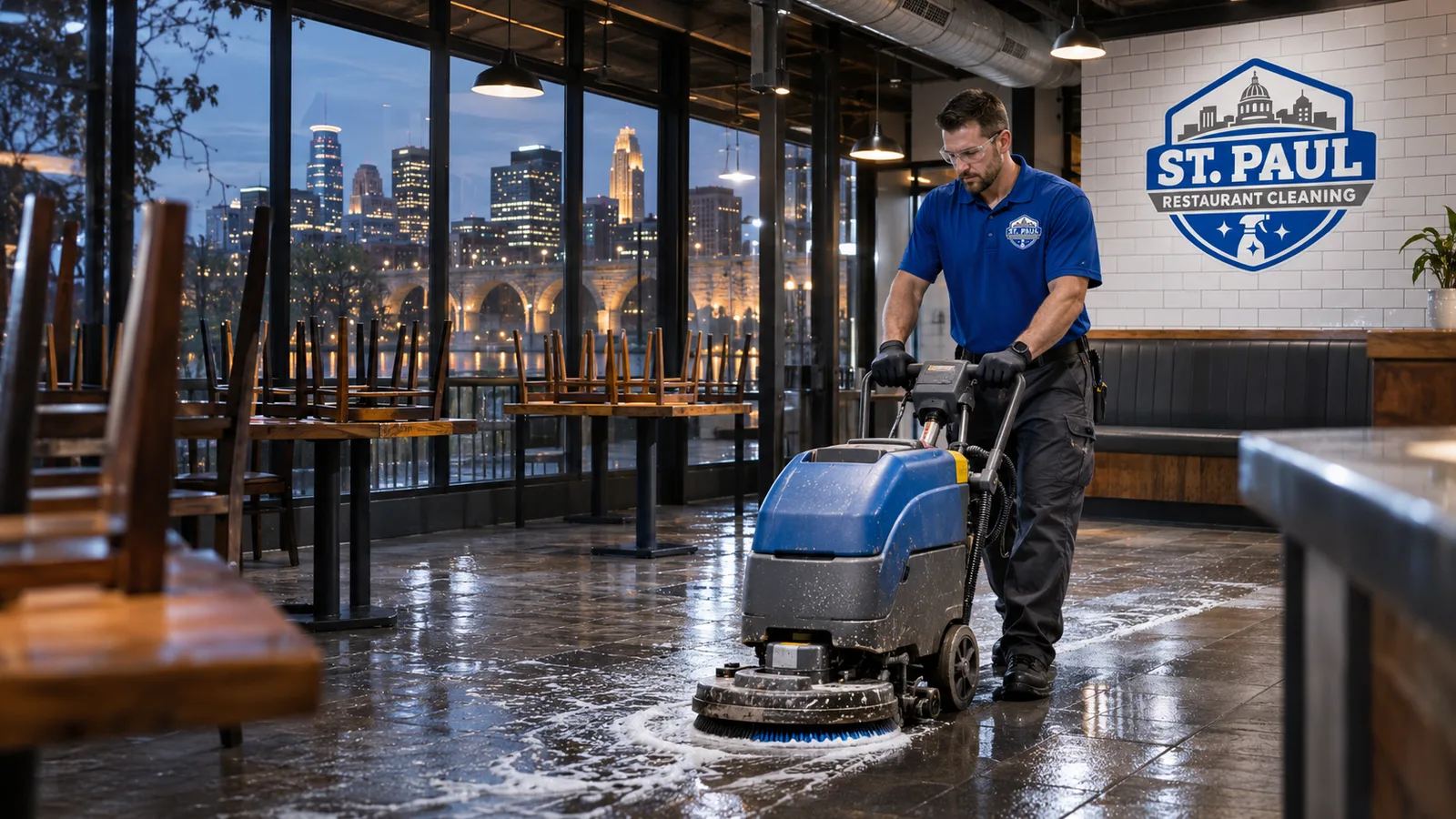
A professional cleaner using commercial equipment on the floor of a Minneapolis restaurant after the dining room has closed.

Restaurant Cleaning · Minneapolis

Restaurant Cleaning Minneapolis

Dependable cleaning for commercial kitchens, dining rooms, floors, restrooms, and high-touch surfaces, scheduled around service hours.

✓Commercial kitchens

✓Dining rooms

✓Floors and restrooms

✓After-hours scheduling

Commercial Restaurant Cleaning

A Practical Cleaning Plan for Your Restaurant

Restaurant Cleaning Minneapolis should support safe food preparation, a welcoming dining room, and a smoother opening routine. St. Paul Restaurant Cleaning develops recurring scopes around the way each restaurant operates, including its service hours, kitchen layout, flooring, guest traffic, and areas that need attention between shifts.

Our team cleans restaurants as restaurant specialists serving Saint Paul, MN and works with operators in Minneapolis who need a clear scope and dependable timing. We can coordinate work after closing, before opening, or during another agreed service window. Your plan identifies the rooms, surfaces, tasks, frequencies, and access requirements so managers know what the crew is responsible for on every visit.

Local conditions matter. Winter brings tracked-in salt, grit, and moisture that can collect around entrances and damage floor finishes if it remains in place. Busy dining districts such as the North Loop may require cleaning around late service and heavy foot traffic. Restaurants near the University of Minnesota may experience sharp changes in traffic tied to classes and events, while downtown operations often need access plans that account for loading areas, secured buildings, and limited parking.

Request a Callback

Scope and Standards

Restaurant Cleaning Services Minneapolis Operators Can Schedule

Request a Callback
✓

Commercial Kitchen Cleaning

Degreasing and cleaning may cover prep surfaces, exterior equipment surfaces, sinks, backsplashes, washable walls, floor edges, and accessible areas beneath movable equipment. The scope identifies exclusions such as internal appliance repair or exhaust-system work.

✓

Dining Room Care

Tables, chairs, booths, ledges, partitions, and other guest-facing surfaces are cleaned with products and methods appropriate for each material. Crews can reset the room according to an agreed layout.

✓

Floor Cleaning

Service can include vacuuming, sweeping, mopping, machine scrubbing, and periodic finish care when suitable for the floor. Entry zones receive added attention during Minnesota's snow and road-salt season.

✓

Restrooms and Touchpoints

Restrooms are cleaned and disinfected according to the written scope. Door hardware, switches, railings, payment-area touchpoints, and other frequently handled surfaces can be included at an established frequency.

✓

Waste and Service Areas

Crews can empty interior receptacles, replace liners, clean designated waste stations, and address employee break areas or back-of-house corridors. Exterior grease containers and waste hauling require separate arrangements.

✓

Detail and Periodic Cleaning

Planned detail work can address baseboards, vents, chair legs, grout lines, wall splashes, and other buildup-prone areas that are difficult to complete during routine shifts.

Surface-Specific Care

Cleaning Methods Matched to Restaurant Surfaces

Restaurant cleaning requires more than applying one product throughout the building. A degreaser suited to washable kitchen surfaces may be wrong for natural stone, wood, or a finished dining-room floor. Crews should follow product labels, observe required dwell time for disinfectants, and avoid mixing incompatible chemicals.

Food-contact surfaces require particular care. Cleaning removes soil and residue. Sanitizing follows cleaning when the surface and operation require it, using an appropriate product at its labeled concentration and contact time. Disposable towels or color-coded microfiber can help reduce cross-contact between kitchens, dining rooms, and restrooms.

Floor methods also depend on the material and soil load. Quarry tile and grout in a cook line may need agitation and grease removal, while luxury vinyl tile, sealed concrete, wood, or carpet calls for a different process. Wet-floor controls and careful scheduling help protect employees and guests when work overlaps with opening or closing duties.

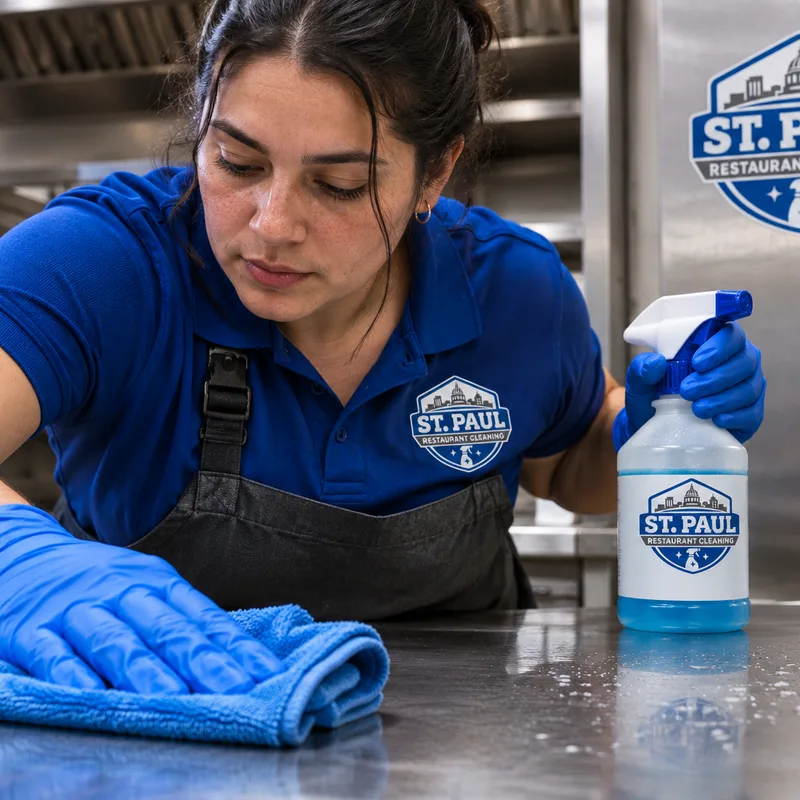
A restaurant cleaning professional using color-coded microfiber and a labeled product on a stainless-steel prep surface with food and utensils removed.
Surface-specific products and tools help keep kitchen and guest areas separated.

Our Process

How Restaurant Cleaning in Minneapolis Is Set Up

  1. 01

    Walk Through the Facility

    The initial review covers the kitchen, dining room, bar, restrooms, entrances, storage areas, and staff spaces included in the request. Access limitations, floor materials, sensitive surfaces, and service hours are documented.

  2. 02

    Define the Scope and Frequency

    Each task is assigned a frequency, such as every visit, weekly, or periodically. The written plan can separate routine cleaning from deep cleaning so managers can compare the scope with their staff's closing duties.

  3. 03

    Plan Access and Safety

    The restaurant establishes entry instructions, alarm procedures, key or credential handling, parking details, and approved work windows. Crews review chemical storage, wet-floor controls, and any areas that remain off limits.

  4. 04

    Complete and Review the Work

    The crew follows the agreed checklist during each visit. Managers can report changing priorities, recurring trouble spots, or schedule adjustments so the plan remains useful as menus, staffing, and guest volume change.

Request a Callback

Bring your current cleaning checklist, operating schedule, and main problem areas to the conversation. We will help turn them into a written scope with clear frequencies and responsibilities.

Request a Callback

Minneapolis Service Area

A Better Fit for Minneapolis Restaurant Operations

A cleaning schedule should follow the operation rather than interrupt it. Full-service dining rooms may need overnight work after the final table leaves. Cafes may prefer service after an early close, while bars and entertainment venues may need later access and stronger attention to sticky residues, glass, and restroom traffic.

Location can change the plan. North Loop restaurants often combine dense foot traffic with late operating hours. Eat Street establishments along Nicollet Avenue may have compact back-of-house layouts where crews must sequence equipment, floors, and waste handling carefully. Northeast Minneapolis restaurants in converted commercial or industrial spaces may have sealed concrete, exposed surfaces, or larger open dining rooms that affect equipment selection. Around Grand Avenue, entry care can be especially important when winter moisture and deicing residue are carried inside.

St. Paul Restaurant Cleaning is based at 222 Starkey St, Suite 5, Saint Paul, MN 55107. For Minneapolis clients, access instructions and service windows are confirmed before work begins, including building security, loading constraints, and where cleaning equipment or approved chemicals may be stored.

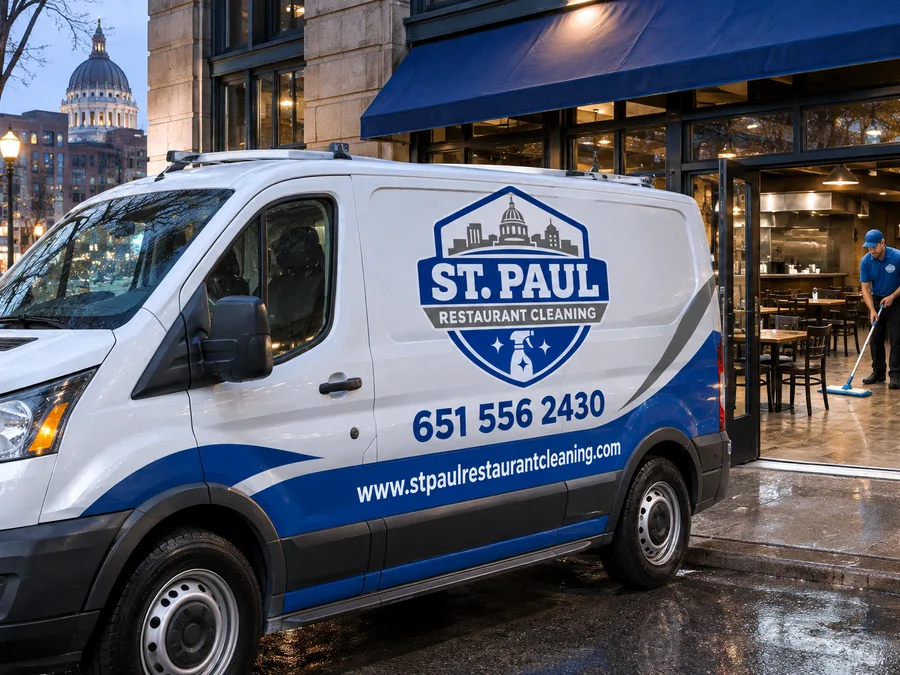
A uniformed restaurant cleaning crew unloading commercial floor-care equipment outside a Minneapolis food-service property during an agreed after-hours service window.

Cleaning Responsibilities

Routine Cleaning and Deep Cleaning Have Different Jobs

Routine service handles the repeatable work required each visit: floors, restrooms, dining surfaces, touchpoints, receptacles, and specified kitchen areas. Deep cleaning addresses accumulated soil or hard-to-reach spaces on a planned cycle. That may include grout agitation, floor-edge detailing, washable wall cleaning, vent exteriors, baseboards, and accessible areas behind movable equipment.

A clear division of duties prevents missed work. Restaurant employees may remain responsible for warewashing, food-contact sanitation during production, internal cooking-equipment cleaning, and immediate spill response. The cleaning crew handles the tasks listed in its scope. Hood, duct, and exhaust-system cleaning is a specialized fire-safety service and should not be assumed to be part of general restaurant cleaning.

The scope can also distinguish cleaning, sanitizing, and disinfecting. These terms are not interchangeable. Cleaning removes visible soil. Sanitizing reduces microorganisms on applicable surfaces when used according to the product label. Disinfecting is generally assigned to specified non-food-contact surfaces and also requires the labeled dwell time.

Request a Callback

Pricing Factors

What Determines the Price of Restaurant Cleaning?

Restaurant Cleaning Services Minneapolis businesses receive are usually priced after a facility review because labor needs vary widely. The main cost drivers are square footage, number of service visits, kitchen grease levels, floor types, restroom count, operating hours, access, and the exact division of work between restaurant staff and the cleaning crew.

A compact counter-service restaurant with daily employee closing duties has a different scope than a full-service operation that needs frequent dining-room, restroom, bar, and back-of-house cleaning. Initial deep cleaning may also be priced separately when crews must remove accumulated grease, heavy floor soil, or buildup along edges and grout lines.

A written proposal should state what is included, how often each task occurs, which supplies are provided, and what conditions may change the price. The exact cost is confirmed after the restaurant and requested scope have been reviewed.

Request a Callback

Common Questions

Questions Minneapolis Restaurant Managers Ask

Can cleaning be scheduled after our restaurant closes?

Yes, service can be planned for an agreed after-hours or pre-opening window when staffing and building access allow. Minneapolis restaurants with late kitchens, secured entrances, shared loading areas, or parking restrictions should provide access and alarm instructions before the first visit.

How often should a restaurant receive professional cleaning?

The right frequency depends on operating days, guest traffic, menu, floor materials, and the cleaning work employees complete during each shift. High-use restrooms and greasy cook-line floors may require attention every operating day, while grout detailing, wall washing, and other deep-cleaning tasks can follow a periodic schedule.

Do you clean food-contact surfaces in commercial kitchens?

Food-contact surfaces can be included when the scope defines the process, approved products, timing, and responsibility for removing food, utensils, and small equipment. These surfaces must be cleaned before sanitizing, and the sanitizer must be used at its labeled concentration and contact time.

Is hood and exhaust cleaning included with restaurant cleaning?

Hood, fan, filter, and exhaust-duct cleaning is not automatically included in general restaurant cleaning. It is specialized work tied to grease-removal and fire-safety requirements, so operators should confirm that it is handled under a separate qualified scope rather than assuming the nightly cleaning crew performs it.

Can you remove winter salt residue from restaurant floors?

Yes, entry and floor care can be adjusted for tracked-in deicing residue, grit, and moisture during Minnesota winters. The method depends on whether the surface is tile, resilient flooring, sealed concrete, wood, or carpet, since the wrong chemical or excessive water can damage some finishes.

How long does it take to start recurring service?

The start time depends on the facility review, scope approval, crew availability, access planning, and whether an initial deep cleaning is needed. A restaurant with keys, alarm procedures, storage details, and a clear task list ready can usually move through setup more efficiently than one requiring several building approvals.

What should we prepare for a cleaning walkthrough?

Prepare your operating hours, current staff cleaning checklist, floor and surface information, access restrictions, and the areas causing the most trouble. Managers should also identify food-contact responsibilities, chemical-storage rules, security procedures, and any tasks handled by separate vendors.
Set Up a Clear Restaurant Cleaning Plan

Share your operating schedule, facility needs, and current trouble spots with St. Paul Restaurant Cleaning. We will review the work, define responsibilities, and prepare a practical scope for your Minneapolis restaurant.