Dining Rooms and Bars
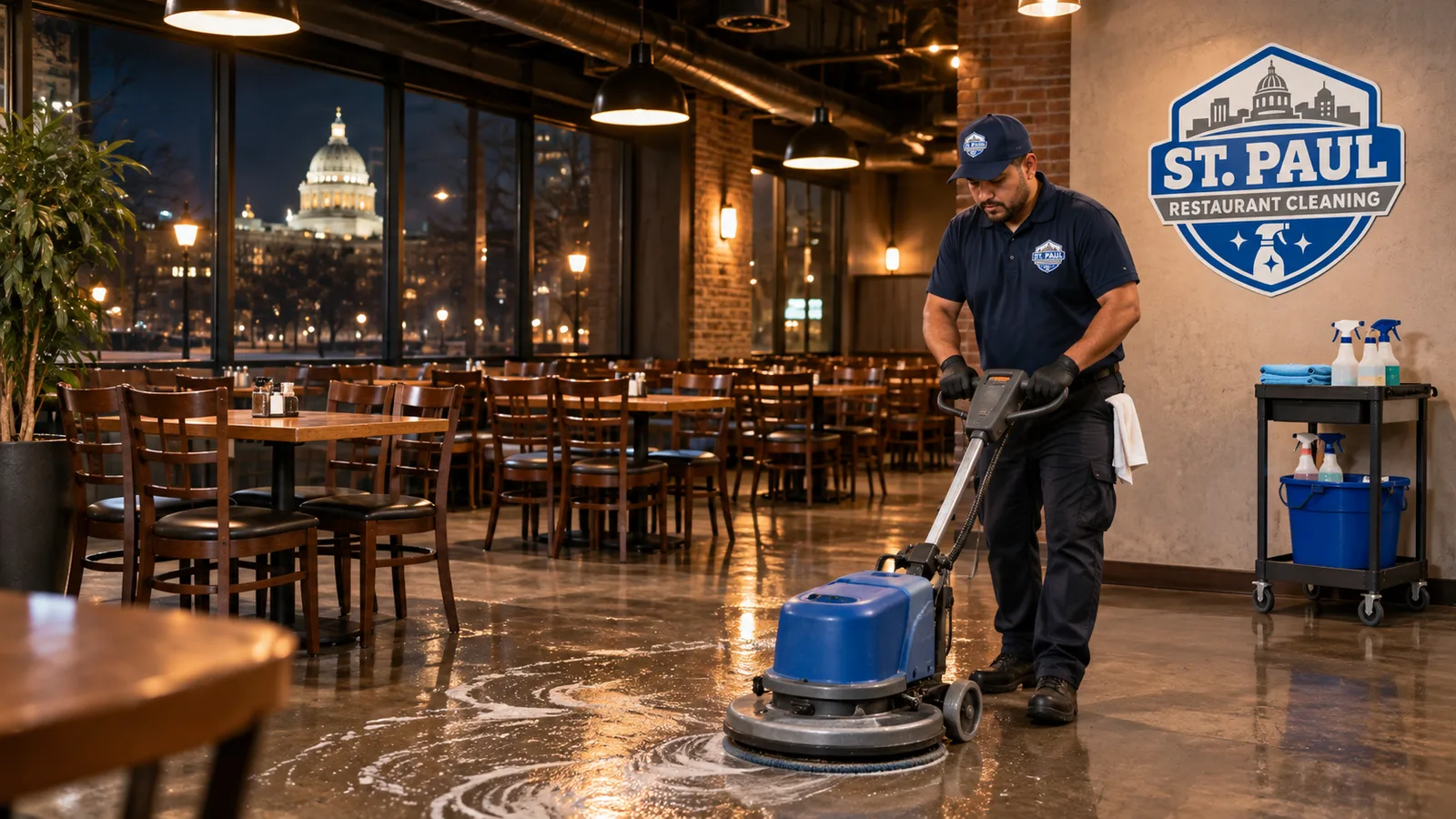
Tables, seating, host stands, ledges, bar fronts, accessible floor areas, and guest-facing glass are cleaned after service. The scope can account for booths, rugs, carpet, hardwood, tile, and resilient flooring.
Serving Saint Paul, Minnesota & surrounding areas
Open 24/7
Overnight Restaurant Cleaning · Saint Paul
Walk into a clean kitchen, guest-ready dining room, and properly serviced restrooms each morning with a nightly scope built around your closing routine.
✓Dining areas
✓Kitchen floors
✓Restaurant restrooms
✓Saint Paul based
After-Hours Restaurant Cleaning
Overnight Restaurant Cleaning gives your staff a clean, orderly workplace before prep begins and guests return. St. Paul Restaurant Cleaning schedules recurring work after closing, with the scope organized around your hours, floor plan, traffic, and sanitation priorities. After food service and guest traffic have stopped, Saint Paul's local restaurant service handles the nightly work that can be completed.
A restaurant is not cleaned like a general office. Grease film collects near cooking and dishwashing areas. Food particles settle beneath tables, booths, and equipment edges. Entry floors receive grit, road salt, and moisture during Minnesota winters. Restrooms need repeatable cleaning and replenishment because their condition directly affects a guest's impression of the entire restaurant.
The nightly plan can cover kitchens, dining rooms, bars, server stations, entries, employee areas, and restrooms. Tasks and frequencies are documented so daily work stays distinct from periodic detail cleaning. Whether your restaurant operates near downtown event traffic, along Grand Avenue's dining corridor, or in a neighborhood commercial district, the schedule should match when your team finishes closing duties and when morning access begins.
Scope and Standards
A practical Restaurant Night Cleaning scope starts with the surfaces that receive direct contact, visible soil, food debris, grease, or heavy foot traffic. Dining-room work commonly includes wiping tables and seating, cleaning service counters, vacuuming carpet, dust mopping or sweeping hard floors, wet mopping, spot cleaning glass, and emptying waste and recycling into designated collection points.
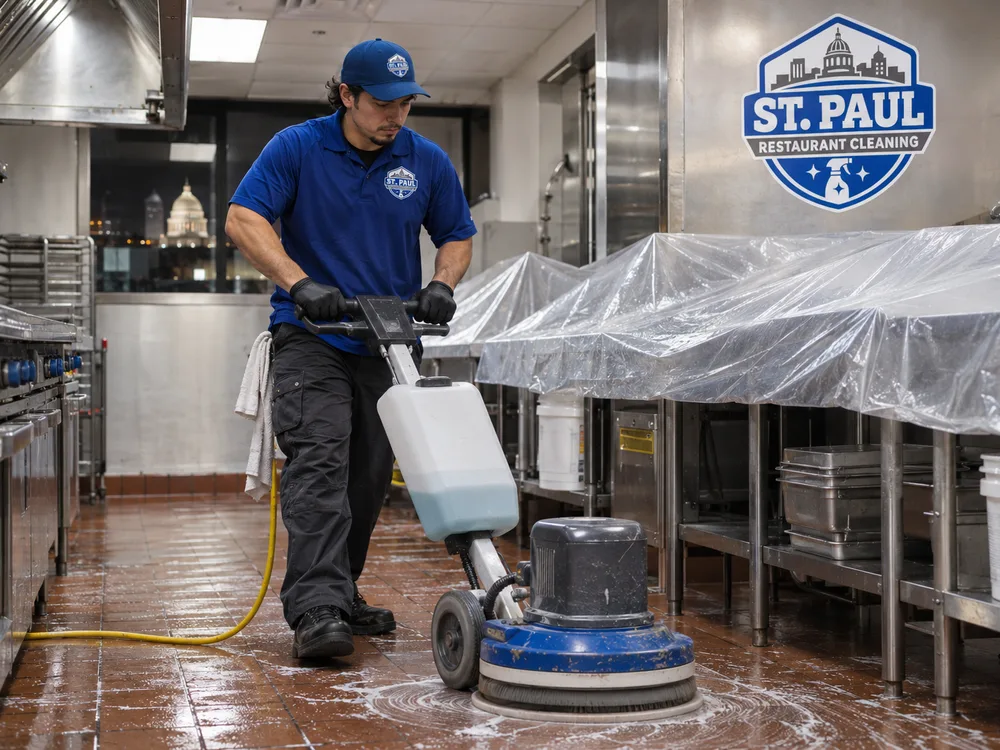
Back-of-house service may include floors, baseboards, washable wall areas, sinks, exterior equipment surfaces, prep-area touchpoints, and the accessible spaces beneath movable items. Cleaners use separate tools or color-coded microfiber for kitchens and restrooms to reduce cross-contamination. Degreaser selection, dilution, dwell time, and surface compatibility all matter. Chemicals should never be mixed, and cleaning work should follow the product label and the restaurant's site-specific procedures.
Nightly janitorial work does not replace food-contact sanitation performed under the restaurant's food-safety plan. Management should define which food-contact surfaces remain the responsibility of kitchen staff, which must be clear before cleaners arrive, and which tasks the janitorial crew may perform. That division prevents missed work and keeps chemicals away from exposed ingredients, utensils, and active prep.
Tables, seating, host stands, ledges, bar fronts, accessible floor areas, and guest-facing glass are cleaned after service. The scope can account for booths, rugs, carpet, hardwood, tile, and resilient flooring.
Loose debris is removed before the appropriate cleaning solution is applied. Greasy areas may require an alkaline degreaser, agitation, controlled dwell time, and thorough recovery rather than a quick pass with a mop.
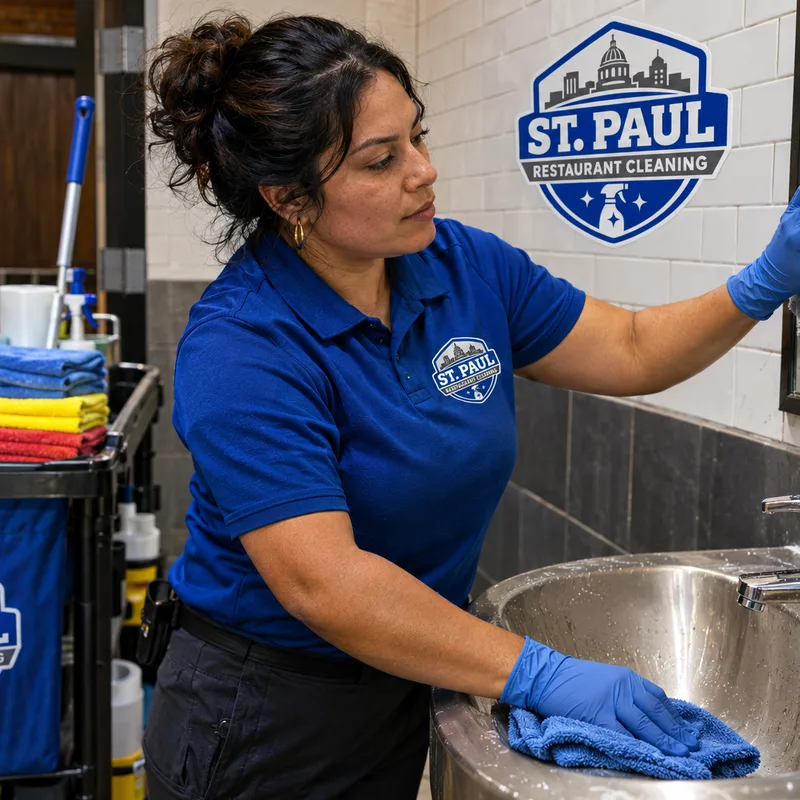
Toilets, urinals, partitions, sinks, dispensers, mirrors, touchpoints, and floors receive a dedicated restroom process. Supplies can be replenished from the restaurant's on-site stock, with shortages reported.
Door glass, handles, push plates, railings, payment-area touchpoints, and entry floors receive focused attention. In winter, mat placement and salt residue require closer floor inspection.
Interior containers are emptied, liners are replaced, and waste is moved to the restaurant's designated collection area. The agreed scope should identify handling rules for cardboard, glass, organics, and leaking bags.
Edges, baseboards, vents, chair legs, wall spotting, and other low-frequency tasks can rotate through a recurring plan. This keeps detail work visible without crowding every nightly checklist.
Our Process
We review the dining room, kitchen access, bar, restrooms, employee areas, floor materials, waste route, alarm procedures, and storage available for cleaning supplies. The walkthrough also identifies any surfaces with special manufacturer requirements.
The written scope states what restaurant staff complete before departure and what the overnight crew handles. It can identify locked rooms, food-contact exclusions, movable equipment, supply ownership, and tasks that need manager approval.
Arrival is coordinated with closing duties, late events, deliveries, and the next prep shift. Key, lockbox, alarm, and sign-in procedures are documented so authorized cleaners can enter and secure the property correctly.
The crew follows an area-based checklist with nightly and rotating tasks. Site notes provide a consistent reference for chemical use, tools, floor methods, waste handling, and any location-specific restrictions.
Management feedback, service notes, and quality checks are used to correct missed items and update the scope when hours, seating layouts, menus, or traffic patterns change.
Guest-Ready Restrooms
Restaurant Restroom Cleaning needs its own tools, sequence, and inspection standard. The crew should remove waste, clean dispensers and high-touch points, apply appropriate products to fixtures, observe required dwell time, clean mirrors and sinks, and finish floors after the other surfaces. Toilets and urinals require tools reserved for that use.
A complete restroom check also looks for empty dispensers, leaks, blocked fixtures, persistent odors, damaged hardware, and unusual soil. Cleaners can report maintenance concerns, but plumbing repair and pest treatment fall outside routine janitorial cleaning. Consumables such as soap, tissue, towels, and liners should have a clear restocking arrangement so the crew knows which products belong in each dispenser.
Winter conditions make entry control especially relevant in Saint Paul. Snow, slush, grit, and deicing residue can move quickly from entrances into dining areas and restrooms. Proper mat care, frequent soil removal, and floor-compatible chemicals help manage the residue without leaving a sticky film. Wet-floor signs should remain available whenever floors are being serviced.
Saint Paul Service Area
Nightly Restaurant Cleaning in Saint Paul should fit the restaurant's actual close, not force the manager into a generic service window. Downtown restaurants may need timing that accounts for concerts, hockey games, and other late events around the Xcel Energy Center. Grand Avenue restaurants often have compact dining rooms where chairs, booths, and narrow service paths require a deliberate floor sequence. University Avenue locations may need added entry-floor attention when snow and street residue arrive with steady evening traffic.
A dependable restaurant janitorial company also plans for access and accountability. Crew instructions should identify authorized entrances, alarm steps, locked storage, chemical locations, areas that must remain untouched, and the person who receives service reports. Employees need enough time to work safely after the restaurant clears, while morning cooks and delivery crews need the building released on schedule.
St. Paul Restaurant Cleaning is based at 222 Starkey St, Suite 5, Saint Paul, MN 55107. A local walkthrough allows the scope to reflect the building, operating hours, and handoff between closing staff and the overnight crew rather than relying on a generic checklist.
Request a CallbackHiring Standards
The proposal should separate kitchen, dining, bar, restroom, entry, and employee-area tasks. It should also state which items are nightly and which follow a weekly or periodic rotation.
Tile and grout, carpet, sealed wood, concrete, and resilient flooring do not all take the same product or process. Ask how the crew controls grease, salt residue, moisture, and chemical buildup on each surface.
The agreement should distinguish janitorial cleaning from the restaurant's required food-contact cleaning and sanitizing. Exposed food, utensils, and prep equipment need an established shutdown and protection procedure.
Confirm who holds keys or codes, how alarms are handled, when doors are relocked, and how incidents are reported. These procedures should be settled before the first overnight visit.
A useful quality process records concerns by room and task, assigns corrective work, and updates instructions when restaurant operations change. Managers should know how to report an issue and what happens next.
Get a written nightly scope based on your closing schedule, floor materials, sanitation boundaries, restroom needs, and morning readiness requirements.
Call for a Free QuoteCommon Questions
Pricing is usually based on labor time, service frequency, total cleanable area, and the condition of the restaurant rather than one flat citywide rate. A small dining room with one restroom and limited kitchen-floor work requires a different crew plan than a large restaurant with bars, multiple restrooms, carpet, heavy grease, and late closing hours. Access delays, consumables, waste handling, and periodic detail tasks also affect the proposal. A walkthrough is the proper way to confirm the exact recurring price.
Yes, overnight service can be scheduled after closing when the available cleaning window is long enough for the agreed scope. Saint Paul restaurants affected by events near the Xcel Energy Center may have variable release times, so the access plan should state how late nights are communicated. The crew also needs a firm completion deadline before cooks, bakers, vendors, or delivery staff arrive.
Nightly cleaning can include dining areas, accessible kitchen and service floors, bars, entries, restrooms, employee spaces, touchpoints, and interior waste removal. The exact checklist depends on the restaurant's layout and staff responsibilities. Food-contact sanitation, hood and duct cleaning, pest control, and equipment repair should not be assumed to be part of a routine janitorial scope.
Yes, restroom service can include fixtures, partitions, sinks, mirrors, dispensers, touchpoints, floors, waste removal, and restocking from the restaurant's approved on-site inventory. The agreement should identify each consumable and who purchases it. Low stock, leaks, blockages, or damaged dispensers can be documented for management.
Grease removal requires the right degreaser, label-compliant dilution, adequate dwell time, agitation, and recovery of the soiled solution. The method must also suit the floor and grout. Heavy deposits may need an initial corrective cleaning before a recurring maintenance schedule can keep the floor at the agreed condition.
Yes, a recurring restaurant cleaning plan should be updated when operating hours, seating, equipment placement, traffic, or kitchen production changes. Seasonal patio use and Minnesota winter entry conditions can also shift labor between areas. A revised checklist keeps the current duties visible to both managers and cleaners.
Closing staff should complete the responsibilities listed in the service agreement, which may include securing food, removing items from designated surfaces, finishing food-contact sanitation, stacking or positioning chairs, and providing access to assigned areas. They should also communicate spills, broken glass, equipment hazards, or late activity before leaving.
Tell us about your restaurant's hours, layout, floor surfaces, restrooms, and current cleaning concerns. We will use those details to prepare a practical overnight scope and service schedule.