How much does restaurant deep cleaning cost in Saint Paul?
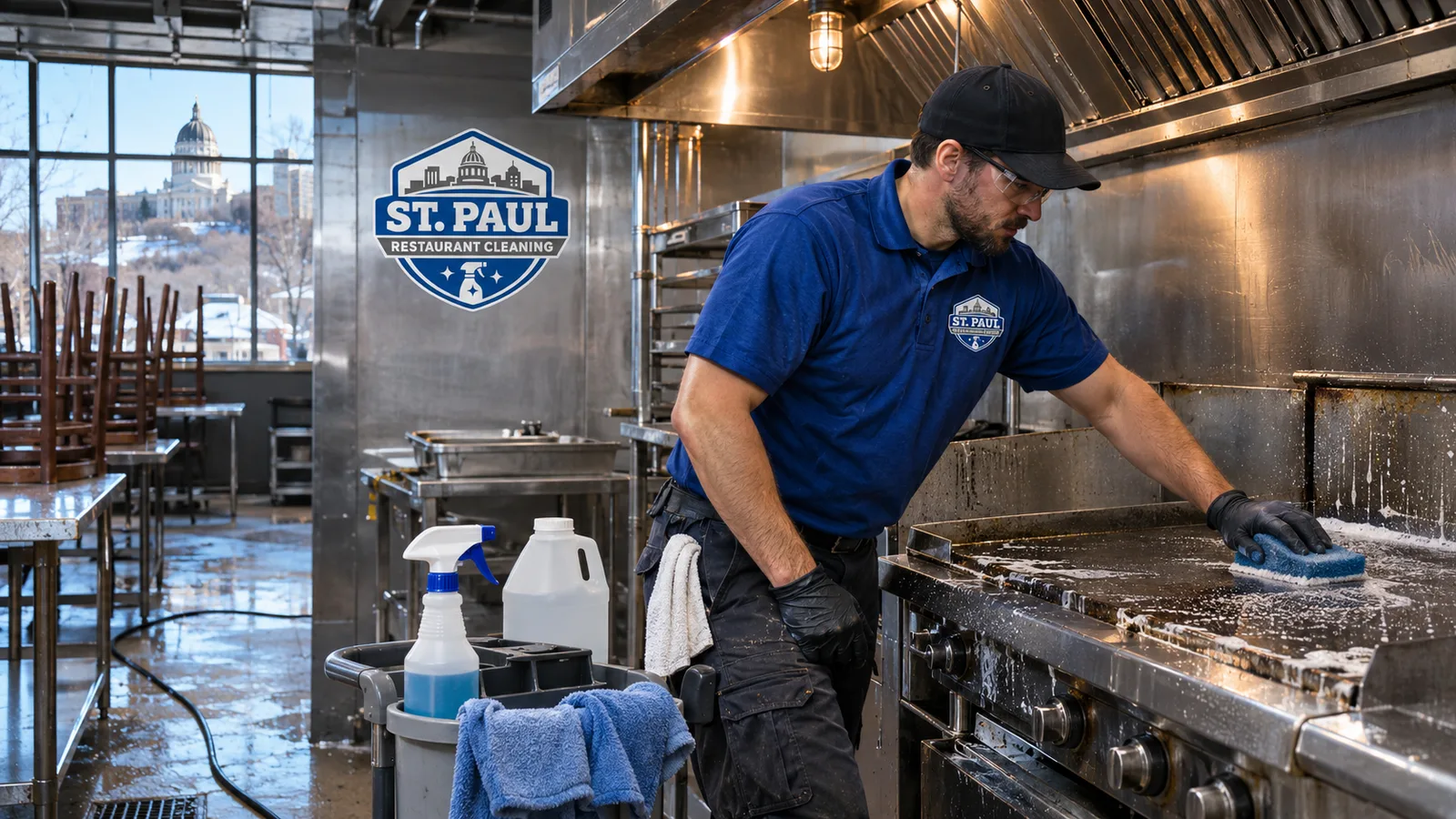
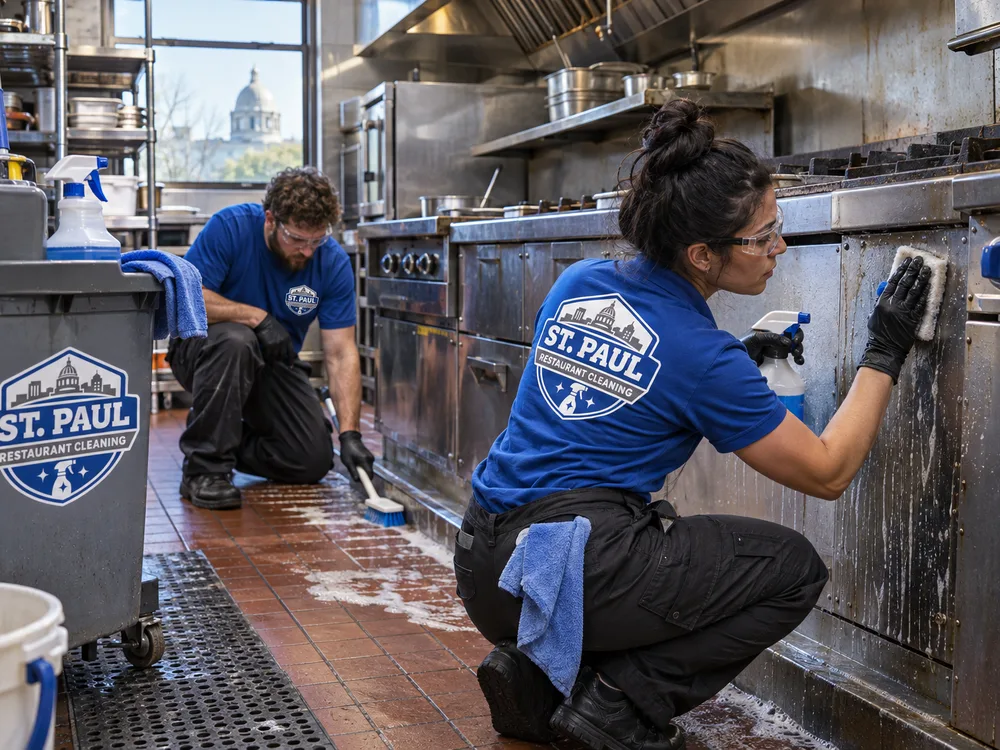
The cost depends on kitchen size, soil level, equipment density, access and the number of areas included. A compact kitchen with accessible surfaces usually requires less labor than a large cook line with heavy grease, overhead dust and a walk-in cooler. Overnight scheduling, equipment movement and phased work can also affect pricing. St. Paul Restaurant Cleaning confirms the exact cost after reviewing the kitchen and written scope.
How long does a commercial kitchen deep clean take?
A commercial kitchen deep clean may take one shift or require phased visits, depending on the scope and condition. A focused floor and equipment-exterior cleaning can be completed faster than a full detailed clean that includes high dusting, walls, storage areas and coolers. Downtown loading restrictions, shared access and limited staging room can also affect setup time.
Do we need to close the restaurant during cleaning?
The scheduled work area should be out of food production while cleaners are using chemicals, moving through the kitchen or leaving surfaces wet. Many restaurants schedule work after closing, on a closed day or in isolated phases. The safest arrangement depends on ventilation, food protection, equipment access and how completely the work zone can be separated from active operations.
What must be removed before walk-in cooler cleaning?
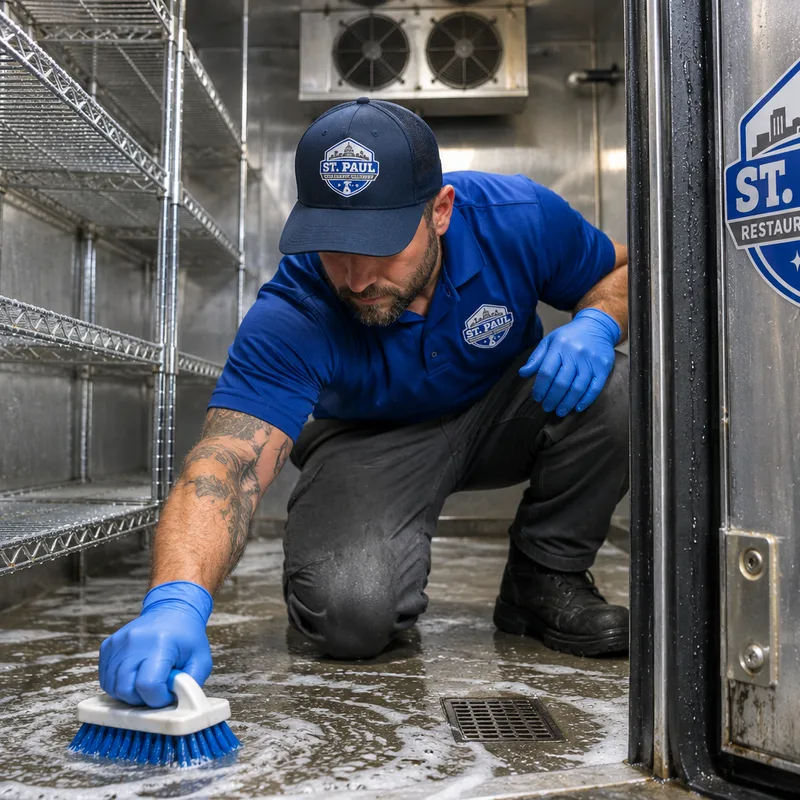
Food, loose packaging and movable contents should be removed or placed in approved temperature-controlled storage before walk-in cooler cleaning. Shelves may also need to be emptied if their surfaces, supports or nearby walls are included. Restaurant staff remain responsible for food handling and temperature control, while the cleaning plan identifies which empty surfaces the crew will address.
Can restaurant deep cleaners move cooking equipment?
Movable equipment may be repositioned only when it is safe, authorized and included in the scope. Equipment connected to gas, hardwired electrical service, plumbing, refrigeration lines or fire-suppression systems should not be disconnected by a general cleaning crew. Restaurant management should arrange qualified help when a connection must be altered for access.
Does high dusting include kitchen exhaust ducts?
High dusting does not normally include internal exhaust ducts, hood plenums or fire-suppression components. It generally covers accessible pipes, ledges, vent exteriors and structural surfaces identified in the scope. Grease exhaust systems require specialized cleaning and documentation, so their boundaries should be kept separate from general kitchen deep cleaning.
How often should a Saint Paul restaurant schedule detailed cleaning?
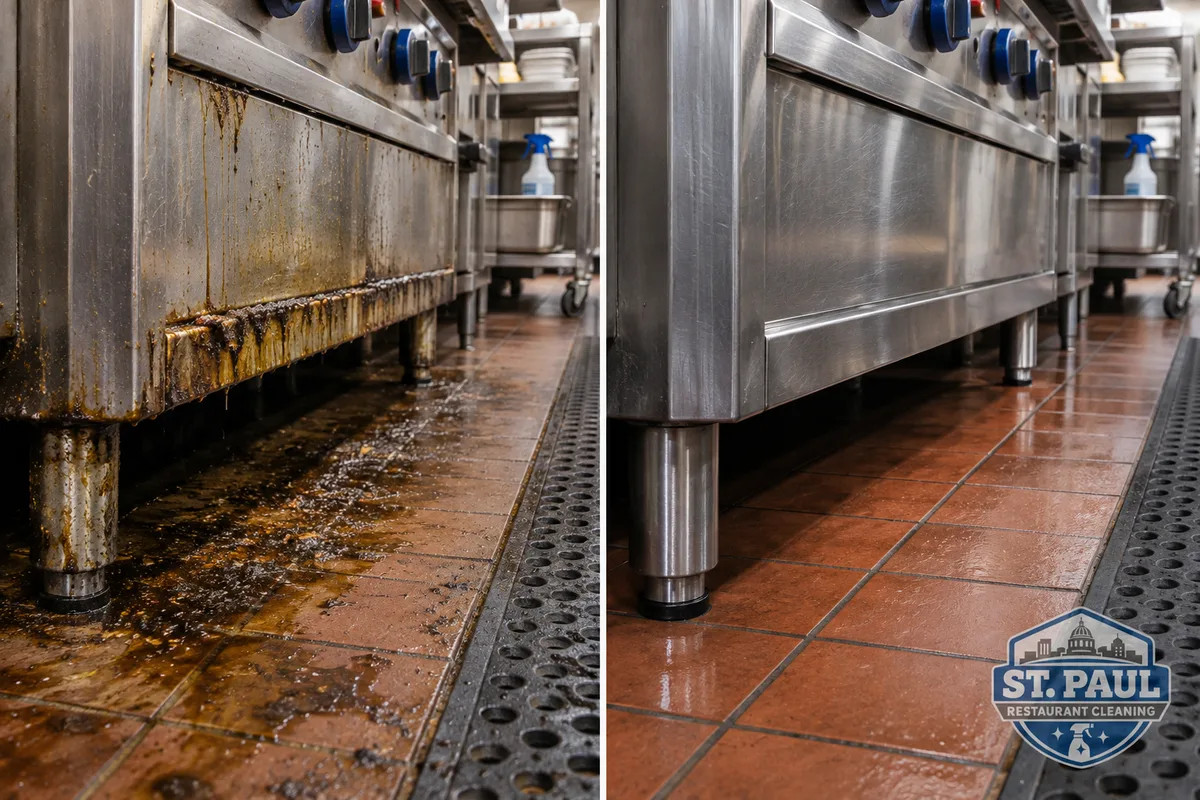
The right frequency is based on cooking volume, menu, equipment layout, soil buildup and the restaurant's own cleaning program. Frying and high-heat cooking can create different needs than baking or light preparation. Seasonal grit near Saint Paul receiving doors may also justify added floor and entry-route cleaning during winter, while overhead and low-access areas can be scheduled according to inspection findings.
What should be included in a professional restaurant deep-cleaning proposal?
A proposal should identify the exact rooms, surfaces, equipment boundaries, preparation duties, exclusions and service window. It should state whether high dusting, walk-in cooler cleaning, floor extraction or equipment movement is included. The restaurant should also know who handles food removal, connected equipment and the final release of cleaned areas for production.