Cooking Line
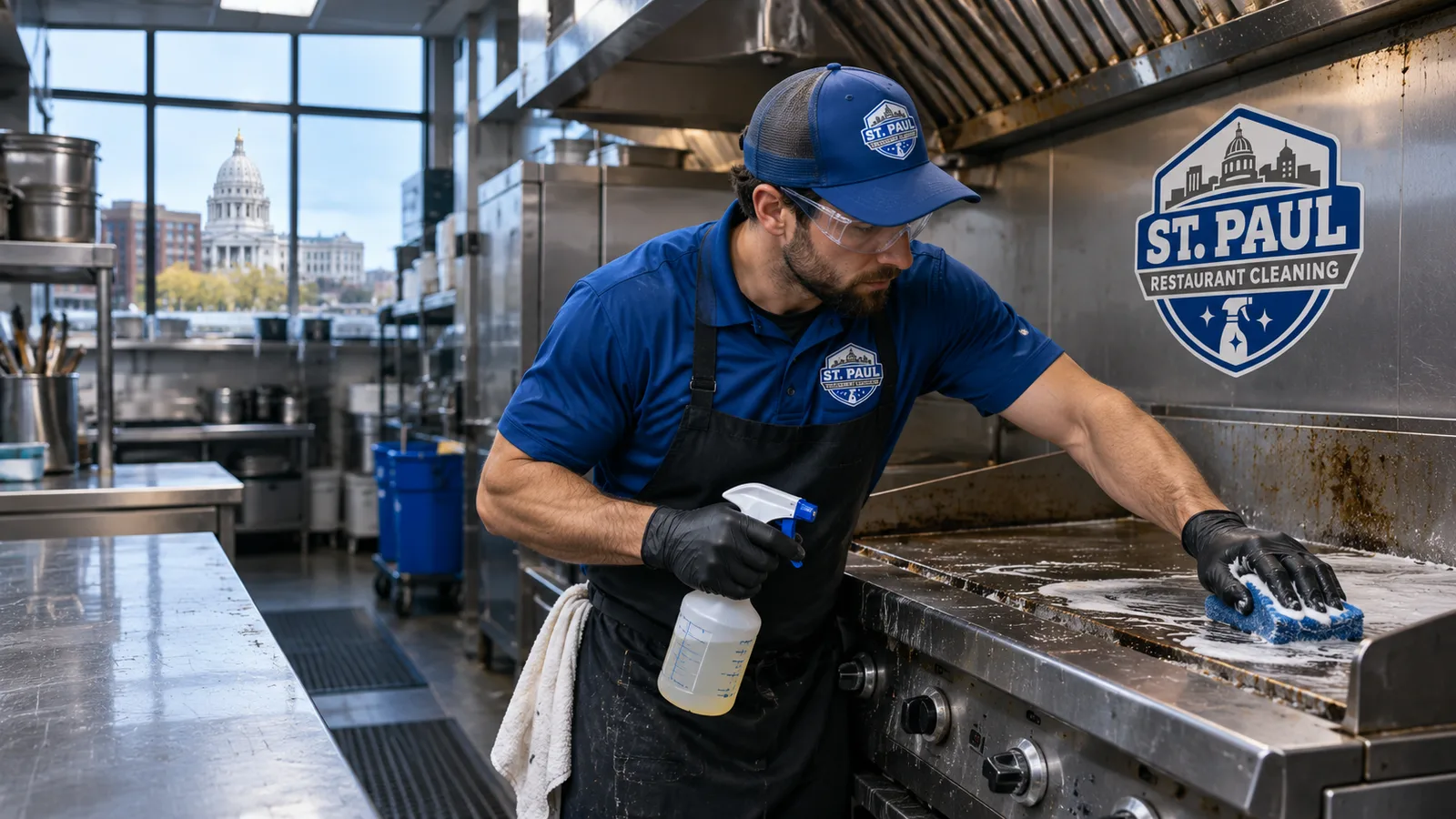
Degreasing and detailing for accessible surfaces on ranges, griddles, fryers, ovens, charbroilers, and surrounding stainless steel.
Serving Saint Paul, Minnesota & surrounding areas
Open 24/7
Kitchen Cleaning · Saint Paul
Detailed commercial cleaning for restaurant cooking lines, equipment, floors, walls, and food-preparation areas, scheduled around your operating hours.
✓Cooking lines
✓Equipment exteriors
✓Floors and prep areas
✓Saint Paul based
Commercial Kitchen Cleaning
Kitchen Cleaning Services remove the grease, carbon residue, food debris, and soil that routine shift cleaning may leave behind. St. Paul Restaurant Cleaning develops the scope around your equipment, operating schedule, access limits, and priority areas. The work can cover a focused cooking line or a planned deep cleaning of the wider kitchen.
A useful scope identifies which equipment will be cleaned, whether movable units can be pulled out, and which surfaces are included. It should also distinguish cleaning from repair, pest control, and exhaust-system work. These boundaries help managers compare proposals and prepare the kitchen before the crew arrives.
Our team works as a restaurant company Saint Paul homeowners rely on, with the same emphasis on clear expectations, careful handling, and accountable service brought to every commercial kitchen assignment. St. Paul Restaurant Cleaning is based at 222 Starkey St, Suite 5, in Saint Paul, which supports practical coordination with local restaurant operators.
Scope and Standards
A commercial kitchen has several cleaning zones, and each calls for the right chemistry and method. Cooking equipment may need degreasing, dwell time, agitation, controlled rinsing, and hand detailing around knobs, seams, legs, and casters. Stainless steel should be cleaned without unnecessary abrasion and finished with the grain when practical.
Typical scopes can include ranges, ovens, fryers, griddles, charbroilers, salamanders, prep tables, sinks, shelving, refrigeration exteriors, and small equipment exteriors. Crews can also address washable walls, backsplashes, doors, floor edges, base areas, and accessible spaces under or behind equipment. Interior equipment cleaning must be agreed upon in advance because access and manufacturer restrictions vary.
Kitchen equipment cleaning does not automatically include hood, duct, or rooftop exhaust cleaning. Those areas involve a distinct scope and access plan. The written proposal should state clearly whether filters, the visible hood canopy, or any part of the exhaust system is included.
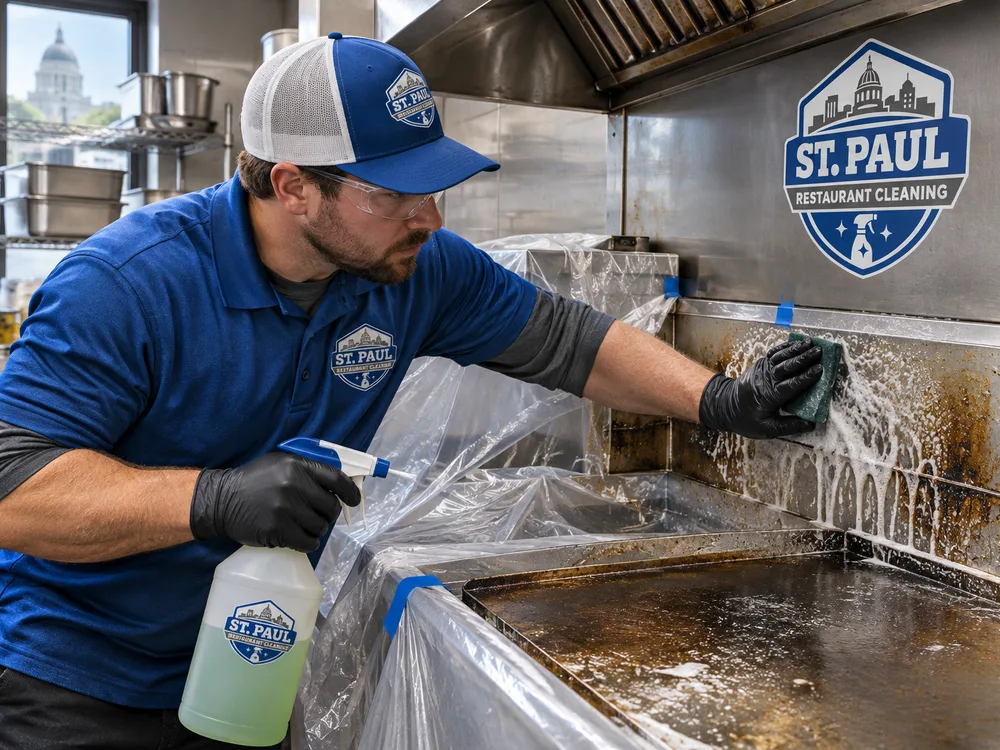
Degreasing and detailing for accessible surfaces on ranges, griddles, fryers, ovens, charbroilers, and surrounding stainless steel.
Cleaning around handles, control areas, doors, sides, legs, casters, and accessible spaces behind movable units.
Cleaning for prep tables, shelving, sinks, backsplashes, washable wall surfaces, and other agreed food-work areas.
Soil removal from floor surfaces, corners, edges, and accessible areas beneath equipment, followed by appropriate rinsing or recovery.
Cleaning of agreed doors, gaskets, handles, shelving, and exterior surfaces after food and loose contents are properly managed.
Focused attention to seams, ledges, splash zones, hardware, and other accessible areas where residue tends to collect.
Our Process
We identify the equipment and surfaces involved, current soil conditions, access restrictions, water and drainage considerations, and any areas that require special handling.
The schedule is built around shutdown, cooling, food removal, and reopening needs. Saint Paul winters can complicate loading access and equipment drying, so entry routes and ventilation should be discussed before service.
Equipment is shut down and cool before cleaning begins. Food, utensils, disposables, and sensitive items are removed or protected, while electrical controls and other vulnerable components receive suitable precautions.
The crew applies the appropriate cleaner, allows controlled dwell time, agitates residue, and removes loosened soil. Methods are adjusted for stainless steel, painted surfaces, tile, grout, resilient flooring, and equipment components.
The completed scope is checked with the designated contact. Any inaccessible area, damaged component, or condition outside the agreed work is documented rather than concealed.
Local Operating Knowledge
Kitchen layouts and service windows differ across Saint Paul. Downtown restaurants may have tight loading arrangements, shared service corridors, or limited overnight access. Grand Avenue dining rooms often operate close to neighboring businesses and residences, making arrival timing and noise control practical concerns. West Seventh includes older commercial buildings where narrow doors, stairs, and compact back-of-house spaces can affect equipment access.
Lowertown businesses may need crews to coordinate with building access rules and event traffic, while University Avenue restaurants often depend on carefully timed work between service periods. These conditions do not change the cleaning standard. They change how the work is staged, which tools can be brought in, and how much preparation is needed.
A local site review helps define those details before work begins. Managers should disclose locked areas, stairs, loading restrictions, floor drains, sensitive alarms, and equipment that cannot be moved. That information allows Restaurant Kitchen Cleaners in Saint Paul to prepare a realistic labor plan rather than making assumptions on arrival.
Hiring Standards
A reliable proposal should describe the actual work instead of relying on a general promise to deep clean. Look for an itemized list of equipment and surfaces, stated exclusions, the expected service window, preparation responsibilities, and the method for documenting completion. Ask whether the crew supplies cleaning chemicals and tools, how wastewater will be controlled, and what must be cool or disconnected before arrival.
The kitchen should also receive a pre-service walkthrough when the scope is large or access is complicated. Heavy carbon buildup, packed grease beneath equipment, delicate finishes, failed gaskets, loose tiles, and damaged electrical components can change the method or limit what cleaning can accomplish. Cleaning removes soil. It does not repair worn equipment, restore damaged finishes, or correct drainage problems.
Professional kitchen cleaning should fit into the facility's own sanitation program. Restaurant management remains responsible for food handling, employee practices, equipment maintenance, pest management, and compliance with applicable requirements. A clear service record can support internal accountability by showing what was assigned and when it was completed.
Request a CallbackPricing Factors
Commercial kitchen cleaning in Saint Paul typically ranges from about $500 to $1,500 for a focused or moderately sized job, while extensive deep cleaning may run $1,500 to $4,000 or more. These are general planning ranges, not a fixed quote.
Price depends on kitchen size, grease and carbon buildup, equipment count, interior cleaning, access behind appliances, overnight scheduling, stairs, and wastewater handling. Hood and duct cleaning may require a separate scope. The exact cost is confirmed after the kitchen and requested work are reviewed.
A written equipment list, service window, and preparation plan make commercial kitchen cleaning easier to schedule and easier to verify.
Call for a Free QuoteCommon Questions
The right frequency depends on cooking volume, menu, equipment, ventilation, and the facility's sanitation plan. Frying and charbroiling usually create heavier grease and carbon than light assembly work. A Saint Paul restaurant should set its schedule after inspecting buildup at the cooking line, beneath equipment, along floor edges, and around prep areas rather than relying on one interval for every kitchen.
Yes, overnight service may be available when access, shutdown, cooling, and reopening requirements are arranged in advance. Hot equipment must have enough time to cool, and food or utensils must be removed or protected. Downtown Saint Paul loading restrictions, shared corridors, security procedures, or winter entry conditions can also affect crew arrival and departure times.
Accessible areas behind and beneath equipment can be included when units can be moved safely and the scope allows it. Gas lines, hardwired connections, water lines, floor-mounted equipment, weight, and tight clearances may prevent movement. The review should identify which appliances restaurant staff will move and which units must remain in place.
Hood and exhaust-duct cleaning is not automatically included in general restaurant kitchen cleaning. Visible canopy surfaces or removable filters may be treated differently from the fan, plenum, ductwork, and rooftop components. Ask for written confirmation of every included exhaust component before scheduling.
Staff should complete the agreed shutdown, allow equipment to cool, remove or protect food and utensils, clear designated shelves, and provide access to the work areas. The crew also needs notice of alarms, locked doors, sensitive controls, stairs, loading rules, and any equipment that cannot be moved. Preparation is especially important in compact West Seventh or Lowertown back-of-house spaces.
Some isolated cleaning can be completed outside the active food-production zone, but deep cleaning usually requires the affected area and equipment to be out of service. Chemical use, wet floors, equipment movement, and soil removal must be separated from food preparation. A phased plan may suit a larger kitchen when a full shutdown is impractical.
A focused equipment or floor scope may take several hours, while a full commercial kitchen deep cleaning can require a full shift or more. Time changes with kitchen size, buildup, equipment access, detail level, and the number of areas included. A walkthrough provides the best basis for planning a Saint Paul service window.
Tell St. Paul Restaurant Cleaning about your equipment, priority areas, access conditions, and preferred service window. We will help define a practical scope before the work is scheduled.