A professional cleaner sanitizing a polished restaurant dining area in Maplewood after closing, with clean tables and floors visible.

Restaurant Cleaning · Maplewood

Restaurant Cleaning in Maple Wood

Keep your kitchen, dining room, service areas, and restrooms ready for staff and guests with a cleaning plan built around your hours and priorities.

✓Dining rooms

✓Kitchen areas

✓Guest restrooms

✓Maplewood service

Commercial Restaurant Cleaning

Reliable Restaurant Cleaning Maple Wood Operators Can Schedule Around Service

Restaurant Cleaning Maple Wood businesses can depend on starts with a written scope, clear responsibilities, and work scheduled around operating hours. St. Paul Restaurant Cleaning handles recurring and detailed cleaning for independent restaurants, cafés, bars, and other food-service businesses in Maplewood.

Our work can cover front-of-house floors and tables, customer restrooms, staff areas, and accessible kitchen surfaces. The exact duties are set before service begins, so managers know which tasks are included and how often they will be completed. For nearby Maplewood properties, Saint Paul's restaurant specialists bring a practical commercial cleaning approach without disrupting meal service.

Maplewood includes restaurants near major retail corridors as well as neighborhood establishments with smaller dining rooms and compact back-of-house layouts. Those spaces need different plans. A high-traffic dining room may require more frequent floor and entrance care, while a small kitchen may need careful sequencing so cleaners can work safely around equipment and stored supplies.

Request a Callback

Scope and Standards

Cleaning Built Around the Way a Restaurant Operates

A restaurant is not cleaned like an ordinary office. Food debris, tracked-in grit, grease films, spills, and frequent restroom use create a changing workload. We plan the order of work to reduce cross-contamination and prevent already-cleaned areas from being soiled again.

Color-coded microfiber cloths and separate tools for restrooms and food-service areas help control cross-use. Cleaning removes soil first. Sanitizing follows on compatible food-contact surfaces when included in the scope, using the product at its labeled dilution and contact time. Disinfectants are used only on appropriate surfaces and according to label directions. These terms are not interchangeable, and the product must remain wet for its stated dwell time to work as directed.

Maplewood winters also bring snow, road salt, and moisture through restaurant entrances. Entry mats, vestibule floors, and nearby hard flooring may need extra attention during winter service. Prompt soil removal helps keep abrasive grit from spreading into the dining room and leaves the entrance presentable for the next opening.

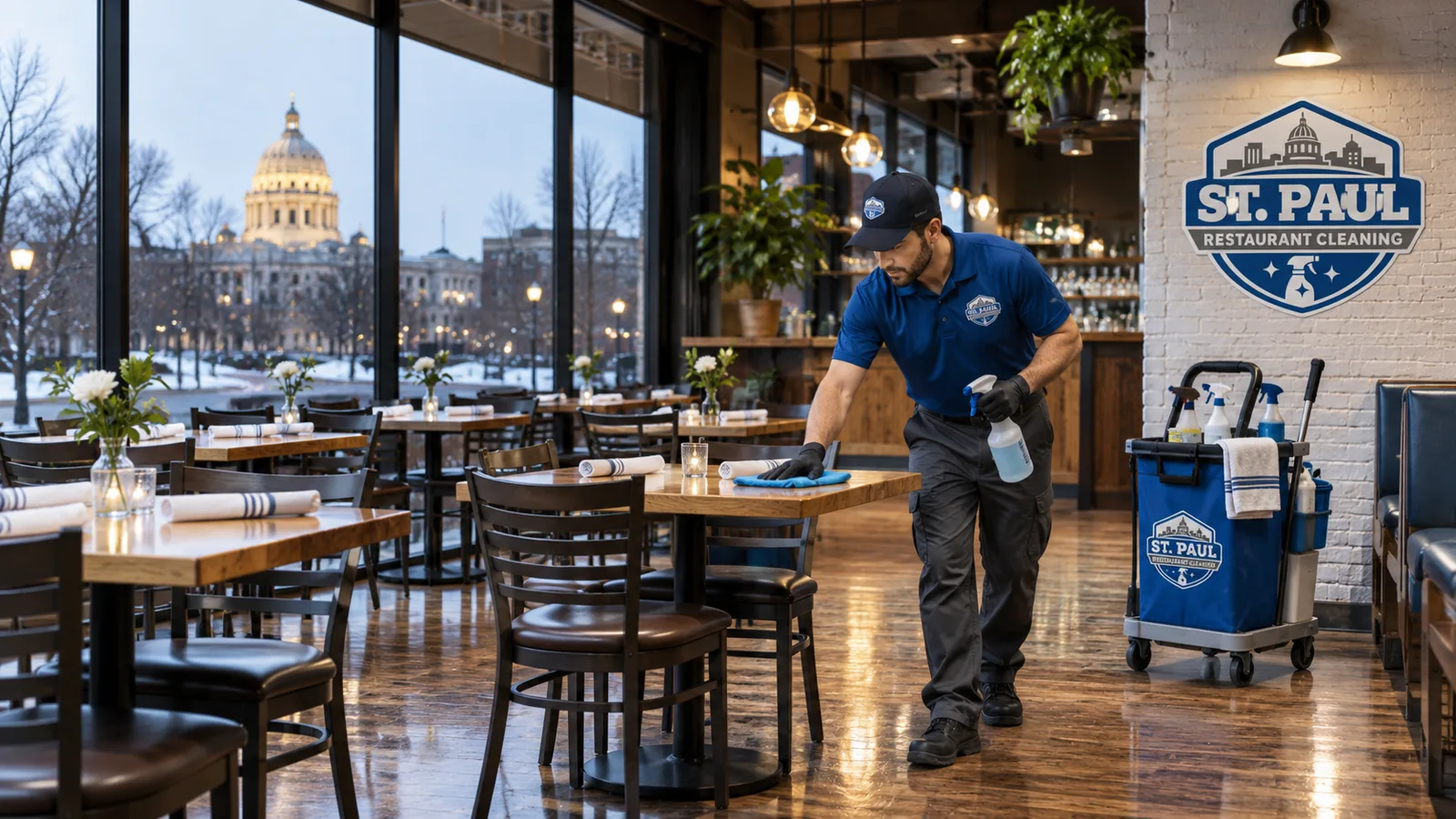
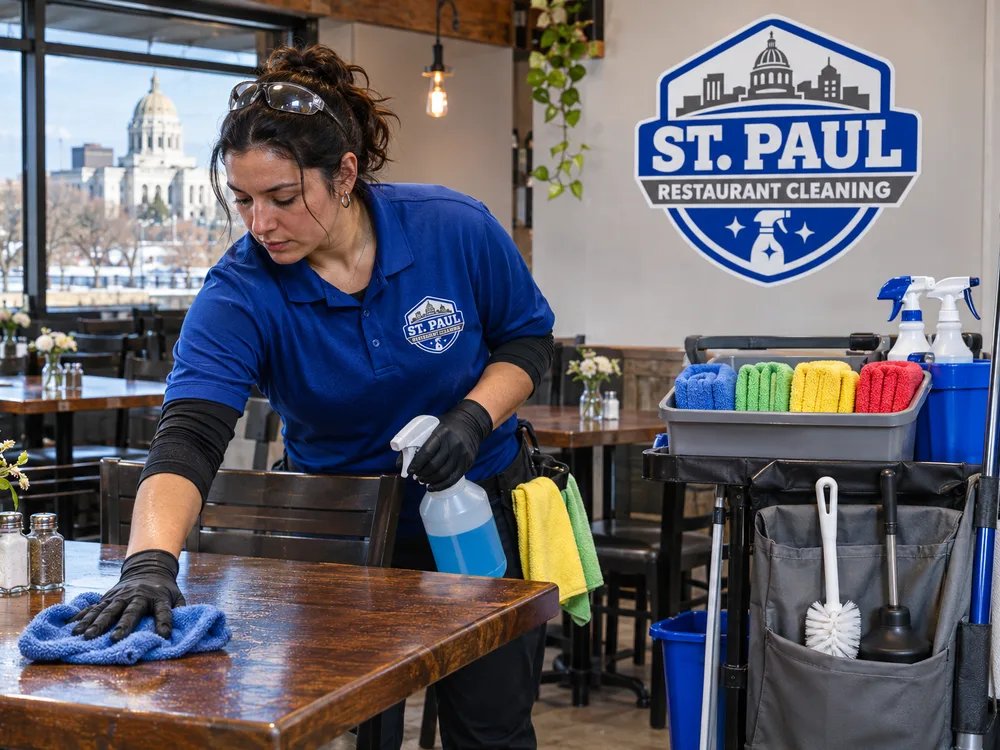
A commercial cleaner using color-coded microfiber supplies on restaurant tables while separate restroom tools remain organized on a janitorial cart.
Separate tools and a planned work order support consistent restaurant cleaning.

Included Service Details

What a Restaurant Cleaning Plan Can Cover

Request a Callback
✓

Dining Rooms and Guest Areas

Table bases, chairs, booths, ledges, partitions, host stands, and other agreed touchpoints are wiped with products suited to the surface. Floors are vacuumed, swept, or damp mopped based on the flooring and level of soil.

✓

Kitchen and Back-of-House Areas

Cleaning may include accessible exterior surfaces, prep-area floors, splash zones, sinks, shelving faces, and equipment exteriors listed in the scope. Staff should remove food and secure active cooking equipment before service begins.

✓

Entrances and Service Paths

Entry glass, door touchpoints, vestibules, pickup areas, and paths used by servers or delivery staff can receive added attention. These areas collect fingerprints, packaging debris, moisture, and grit quickly.

✓

Staff and Utility Spaces

Break areas, employee restrooms, offices, storage-area floors, and waste-handling touchpoints can be assigned routine frequencies. Access and food-storage controls are agreed upon before work starts.

✓

Scheduled Detail Work

Periodic tasks may cover baseboards, chair legs, wall spots, floor edges, vents within safe reach, and buildup in accessible corners. Rotating these duties helps keep them from being missed during nightly cleaning.

Restaurant Restroom Care

Restaurant Bathroom Cleaning in Maplewood

Restaurant Bathroom Cleaning Maplewood managers can rely on requires more than emptying bins and wiping a sink. Restrooms influence a guest's impression of the entire operation, and they need a repeatable checklist.

A typical service can include toilets, urinals, partitions, sinks, faucets, dispensers, mirrors, doors, touchpoints, floors, and waste receptacles. Soil is removed before an appropriate disinfectant is applied. High-touch surfaces such as flush controls, latches, handles, and faucet controls receive focused attention. Floors are cleaned last with restroom-only tools to limit cross-contamination.

Product selection matters. Acidic products can damage some stone and grout, while harsh abrasives may scratch fixtures or partitions. We account for the installed materials and note recurring concerns such as mineral residue, soap buildup, odors, or supply shortages. Consumable restocking can be discussed during scoping, but the manager retains a clear record of which supplies the restaurant provides and which tasks the cleaner performs.
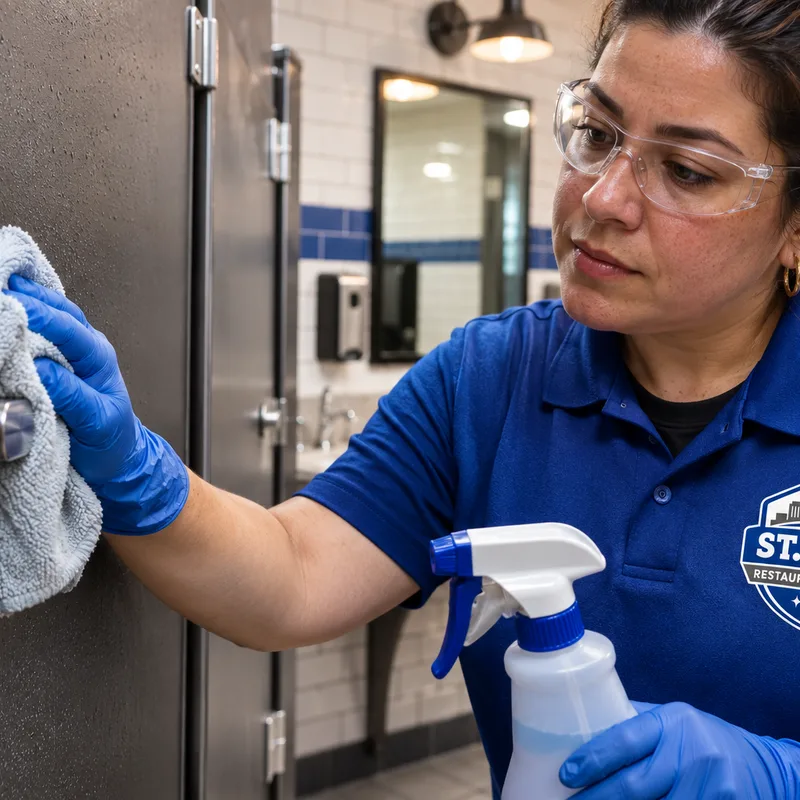
A cleaner wearing gloves disinfecting restroom partitions and high-touch fixtures in a well-maintained restaurant bathroom.
Restroom-only tools help keep bathroom work separate from dining and kitchen areas.

Our Process

How We Set Up Recurring Restaurant Cleaning

  1. 01

    Review the Property and Operating Schedule

    We discuss the dining room, kitchen access, restrooms, flooring, closing routine, alarm or key procedures, and any areas that are off limits. The service window must allow enough time for safe, orderly work.

  2. 02

    Build a Written Task List

    Each area receives defined tasks and frequencies. Nightly priorities can be separated from weekly or periodic detail work, and responsibility for dishes, equipment interiors, waste, and consumables is clarified.

  3. 03

    Prepare the Restaurant for Service

    Restaurant staff secure food, remove personal items, shut down equipment as required, and provide safe access. Cleaners then stage supplies to keep restroom tools apart from front-of-house and kitchen tools.

  4. 04

    Clean in a Controlled Sequence

    Work generally moves from cleaner areas toward dirtier ones and from higher surfaces to floors. Soil is removed before sanitizers or disinfectants are applied, and labeled contact times are followed.

  5. 05

    Document Issues and Adjust the Plan

    Managers are informed about access problems, unusual spills, damaged surfaces, empty dispensers, or tasks that need approval. The scope can be revised when hours, traffic, menus, or floor-care needs change.

Request a Callback

Defined Responsibilities

A Clear Scope Protects Food-Safety Responsibilities

Commercial cleaning supports a sanitary restaurant, but it does not replace the operator's food-safety program. Restaurant management remains responsible for staff hygiene, food handling, temperature control, warewashing, pest prevention, and compliance with applicable Minnesota and local requirements. Cleaning duties should fit into those procedures rather than conflict with them.

Before work begins, identify food-contact surfaces, chemicals that may be used in each area, and equipment that requires manufacturer-specific care. Safety Data Sheets should be available for workplace chemicals, and products should never be mixed. Bleach and ammonia-based cleaners, for example, can release dangerous gases when combined.

Some specialized work may require separate planning or a qualified vendor. Exhaust hoods, ducts, fire-suppression components, deep fryer interiors, grease interceptors, and pest treatment are distinct from routine janitorial cleaning. A precise scope prevents confusion about who handles them and when.

Request a Callback

Pricing Factors

How Much Does Restaurant Cleaning Cost in Maple Wood?

Recurring restaurant cleaning in Maplewood typically costs about $0.12 to $0.35 per square foot per visit, while small properties may be priced at a minimum visit charge of roughly $150 to $350. These are general planning ranges, not a quote.

Final cost depends on square footage, service frequency, restroom count, kitchen soil, flooring, access, required detail work, and the time available after closing. Periodic floor care or heavy initial cleaning is usually priced separately. The exact cost is confirmed after a property review and written scope.

Request a Callback

A walkthrough can turn a general cleaning request into a practical schedule with defined tasks, frequencies, access requirements, and pricing.

Call for a Free Quote

Common Questions

Questions Maplewood Restaurant Managers Ask

Can restaurant cleaning be completed after closing?

Yes, restaurant cleaning can usually be scheduled after closing when the property is secure and staff have finished their shutdown duties. The service window should account for Maplewood operating hours, alarm procedures, food storage, equipment cooldown, and enough time for floors to dry before staff return.

What affects the price of Restaurant Cleaning Maple Wood businesses need?

The main cost drivers are floor area, frequency, restaurant layout, restroom count, kitchen soil, floor type, and the amount of periodic detail work. A compact restaurant with heavy grease and a short overnight access window may require more labor than a larger dining room with light soil, so a walkthrough is the soundest basis for pricing.

Do you sanitize food-contact surfaces?

Food-contact surface sanitizing can be included when the surfaces, approved products, and responsibilities are identified in the written scope. The surface must first be cleaned, and the sanitizer must be used at its labeled concentration and contact time. Restaurant management should disclose manufacturer restrictions and its established food-safety procedures.

How often should a restaurant bathroom be professionally cleaned?

The right frequency depends on guest traffic, operating hours, fixture count, and staff maintenance during service. A busy Maplewood restaurant may need staff restroom checks throughout the day plus a thorough after-hours cleaning, while recurring detail tasks such as partition edges and grout may follow a separate schedule.

Can you remove heavy grease or restore neglected floors?

Heavy initial cleaning and periodic floor care can be assessed separately from routine service. The correct method depends on whether the floor is quarry tile, resilient flooring, concrete, or another material, as well as the coating and soil present. A test area may be appropriate before aggressive chemicals or mechanical methods are approved.

Will your team restock restroom paper and soap?

Restocking can be added when the restaurant supplies compatible products and the dispensers are accessible. The written scope should state who orders consumables, where backup stock is kept, and whether low inventory is reported after service.

Put a Clear Restaurant Cleaning Plan in Place

Tell St. Paul Restaurant Cleaning about your Maplewood property, operating schedule, priority areas, and current cleaning concerns. We will use those details to prepare a defined scope and realistic service plan.